Monday, September 9, 2013

Organizing Work in the New World

To understand how work changed in the early history of the United States, it is necessary to have an understanding of how work was organized before there was a United States. We will examine how various Native American groups organized work, and then contrast that with how Europeans organized work during the same period. This will allow us to contrast the two, and give us some insights into the conflicts and misunderstanding the two societies had with each other.


Work in Native American Societies.

If you depend upon European accounts of how Native Americans worked at subsistence, you get the impression that natives lived off the largess of the land, and did little work--particularly males. Not surprisingly, this was really not the case. Natives did much to shape their environment, and at times before first contact with Europeans, had developed quite sophisticated civilizations just as hierarchial as European societies; most famously this was the case with the Aztecs, but there were societies in North American that approached that level of sophistication, as well. Certainly the Moundbuilders of southern Ohio, Kentucky, Tennessee, and northern Alabama can be considered relatively sophisticated societies, and the artifacts those societies left behind (the mounds) are testament to both a hierachial society (that is to say, someone directed the work of building the mounds, and many people worked under that direction) as well the ability to produce a surplus of food to feed the workforce.

 
Cahokia Mounds, located just east of present-day St. Louis, is perhaps the apex of Native American civilization in North America. Cahokia was probably the largest city in North America until perhaps 1770, with a population conservatively estimated in excess of 14,000 people. This meant that there was, of course, a substantial popultion of workers building this huge complex of mounds to feed, build housing for, and keep warm. The downfall of Cahokia was probably due to the fact that all of this activity denuded the area of trees (for building activity and fuel to cook food), leaving the area susceptible to extreme flooding, which caused workers to lose confidence in the leaders of the society and to abandon the project. By the time of European contact, these complex societies in the middle of the continent has been largely abandoned. Maize cultivation continued, but native peoples (except those living in harsher climates like the American Southwest) largely returned to living in smaller, clan-based societies.
 
In these smaller, clan-based societies, much of the work of cultivation of food was done by the female members of the clan. The men usually assisted in preparing the fields (if preparation was deemed necessary), but most of the work was done by females. Men hunted game, and spent much of the rest of their time either hunting, at war with other native groups, or playing war-like games (lacrosse is the descendent of one of these games) with other native groups. While this seems patently unfair, this gave women tremendous influece over the affairs of the clan or group--because they provided most of the nutrition and sustenance for the group. In fact, most native peoples organized themselves along matrilineal lines (that is, they traced their descendence from their mother's family), and women often had a great deal of influence over the affairs of their clan. Cultivation of food in the "Indian style" was also less onerous, because of the way they cultivated food. Corn, beans, and squash--the "Three Sisters"--were all grown together in one mound. The corn stalk provided support for the beans, while the squash grew along the ground and inhibited the growth of weeds. Childcare was a shared responsibility among the women, as well.
 
 
Work in European Socities
We are quite familiar with the way work was organized in European Societies, because that has, of course, become the way that work is organized in most modern societies. During the early years of contact with Native American societies, however, work was organized in Europe very differently than work in an industrialized society. Before 1600, most workers were engaged in agricultural work. With the emergence of industry this means of organizing work changed drastically. The term "industrial revolution" is often used to describe these changes, but that term is something of a misnomer. These changes were gradual, taking years to take hold. This means that the changes so affected were not necessarily destined to happen, or irreversible. One of the earliest responses to these changes in England was the passage of the Statute of Artificers (1562). This law attempted to limit the maximum pay workers could obtain, and also limit the opportunities for advancement for these workers. The law also decreed that sons had to follow in the trade of their fathers.
 
This development was in part a response to the disruption the enclosure of the commons caused British society. The commons was essential to subsistence farming in Great Britain, because it allowed those without adequate land of their own to keep livestock--a goat, sheep, or perhaps even a cow. When country gentry began to enclose these areas, claiming "ownership," this began forcing poor farmers off the land and into cities, where they could only subsist by casual day labor, obtaining a trade, or shipping out to sea on either a merchant ship or man'o'war--particularly attractive with the Spanish discovery of gold in the New World and the willlingness of Queen Elizabeth to grant writs of marque for privateers. The wealth Spain was obtaining from the New World, and their alleged mistreatment of the natives, led other countries--including Great Britain--to claim rights to obtain land in North America.
 
Jamestown

The Virginia Company were a group of investors, expecting a return on their investment, on the model of the West Indies Company that had financed the sugar plantations in the British Caribbean.

 Captain John Smith was a much more complex character than Disney would lead you to believe; short, swarthy, and hairy (by contemporary accounts); Smith proposed to overcome the natives militarily and then enslave them, using the Spanish model. The Jamestown settlement was reliant upon Smith’s ability to cajole and threaten to get corn from the natives; the natives soon realize this and threaten to abandon the area and allow whites to stave to death.

 “The Starving Time” (1607) – then inability of the Jamestown settlement to grow enough food for themselves, combined with the diseases they contracted which incapacitated a number of them, meant that for the first several years the people of the settlement were reliant upon food arriving for them from England.  When shipments were delayed or did not arrive, a number of settlers quietly starved to death. Smith’s leadership  ameliorated this condition somewhat, since he decreed and enforced that all settlers were to put in 4-6 hours a day in the fields (or they would not eat). The Virginia Company had no idea what it would take to set up a productive colony in North America; they sent workers like goldsmith and jewelers, whose crafts provided a newly established settlement with no useful skills, and would not for a number of years; the people sent to Jamestown were also top-heavy with gentlemen, who did no manual labor by station, and not enough husbandmen and farmers.

The settlers at Jamestown were  completely dependent upon natives supplying them with food – but the relations with the natives were strained; battles with natives broke out in which military operations were carried out which would burn villages and destroy caches of the corn crop—which the English themselves were dependent upon. The condition of the settlers compelled some to commit acts of cannibalism; in a recorded instance, a man killed his wife, chopped her up and ate her, in an area of abundant game, fish, fruits, nuts, and berries.  There were also instances of the dead being dug up so that the living could eat them.

Part of the reason for this was the social composition of Jamestown settlers:

1)   Gentlemen – 36 of 105 settlers, which meant that nearly 1/3 of settlers, expected that they would perform no manual labor because it was beneath their station in life.

2)   Craftsmen – made up the largest portion of the population, but none expected to work outside of their area of training, or outside of their craft (due to restrictions that they had always practiced that craft under—namely, the Statute of Artificers.  Too often, their particular craft was not needed, so they sat around pursuing leisure activities (gambling, etc.) while they and their fellows starved to death.

3)   Husbandmen and farmers – made up the smallest portion of the settlers, but they were expected to produce enough food for the entire settlement.

This organization of society seems senseless to us today—after all, if one were starving, why would you just accept that fate and not try to find food for yourself?  But many English were use to an inadequate diet and hunger while they were in England, and they had no expectation that life would be substantially different for them on a new continent.

 The Tobacco Boom (1611-1630, approximately) – the best grade of tobacco came to Europe from Turkey; Virginia tobacco was considered a grade or two below that, but tobacco was destined to provide the colony with a way to attract new investment.  At first, tobacco was seen as undesirable, an unclean habit; it increasingly gained favor, however, with a resultant rise in the value of tobacco. The addictive nature of tobacco, and the newly abundant supply, created a  price boom – by 1619, the price a tobacco farmer could get for tobacco was approximately three shillings a pound (or approximately $1,500/hogshead barrel, which equaled about 300lbs.).  This price only prevailed for about ten years, however; as the market was flooded with Chesapeake tobacco, the price declined, until in 1630 the price for a pound of tobacco had declined to about a penny a pound (or $5.00/hogshead). The immediate effect, however, was to create a labor shortage – to take advantage of this tobacco boom, tobacco growers needed to get labor to the colony to produce the crop to sell to merchants in England.

Tobacco is a labor-intensive crop;  the growing, harvesting, and processing of tobacco required a great deal of labor.  On top of this, it takes a year and a half for the tobacco plant to mature, and the plant needs a lot of attention to flourish. One person could attend to approximately 2,000 tobacco plants, which in turn would yield about 500lbs of tobacco; therefore, the more labor one could employ (but not necessarily in the definition of pay), the greater one’s chances of making a substantial amount of money there were. This coincided with a labor “surplus” in England, which during this time was undergoing a period of consolidation of land holdings on the part of the landed gentry (the enclosure of the commons), and the early beginnings of the Industrial Revolution (where peasants who where being pushed out of farming were in the process of becoming wage workers in factories in urban areas).

Labor “recruitment” came from prisons and workhouses, as well as those recruits of “spirits” and “crimps” who simply kidnapped persons of the lower classes, and put them on ships to the Americas to be employed as indentured servants (a practice which was known among this population as being “barbadosed,” because Barbados was the destination of the greatest share of such people, to work on the sugar plantations). Workers often required "seasoning” – ships with new indentured servants usually arrived in Virginia at the beginning of summer. The combination of a long, arduous journey, general malnutrition, and a variety of diseases then prevalent during the summer in the Chesapeake area (like malaria, typhus, and diphtheria), combined with the pace of work killed off a horrific number of workers.

Massacre of 1622

A surprise attack by natives upon Jamestown resulted in the killing of 347 men, women, and children; this resulted in a retaliatory strike by the remaining Jamestown settlers, and a determination to wipe out natives in the area once and for all; however, its also prompted an investigation by Parliament which uncovered the fact that despite the immigration of 3,570 people in the three years proceeding the native attack, only 1,240 English subjects were alive at the time of the attack.  The population of Jamestown before this period of intensive immigration was 700—which meant that 3,030 people had died in the preceding three year time period.  On top of this, the Virginia Company was nearly bankrupt; in 1624 the crown took over responsibility for the settlements in Virginia.  The population losses decrease after this, but remained relatively high throughout the 1620s and 1630s.

Population increase from about 1640, due in part to the drop in demand for tobacco (the market was glutted at this time period); other crops with less intensive labor requirementswere grown which were then sold to plantations in the Caribbean. The propagation of apple trees – used largely to make cider, which meant that less contaminated water was consumed, which decreased the prevalence of diseases like dysentery and typhus); new workers began arriving in the fall, rather than new workers arriving in the beginning of summer, they arrived at the beginning of fall, which gave them a longer time to acclimate themselves.

New Problems

This led to an increased demand for land, as more servants survived their period of indenture, there was a corresponding increase in the demand for more land. Indentured servants, by contract, were given head rights – the term used to explain the right to land that one claimed when it could be proven that one making such a claim had paid for the passage of another to the colony (this helped provide a larger number of planters to employ indentured servants, who themselves were usually promised a substantial amount of land and the tools to work it in return for their labor); because unimproved land was more valuable than improved land (tobacco could only be grown for a three or four year period before exhausting the land), those who could afford to employ indentured servants benefit. This led to increased costs of labor, as more indentured servants survived their period of service and made greater demands for land.  When indentured servants did not survive the seven years of their service, it was more economically viable for large planters to employ indentured servants; as these indentured servants began to live longer, however, the employment of slaves became more attractive. The higher initial cost of slavery – the employment of slaves had a higher start-up cost, because slaves were more expensive than indentured servants--meant that until one could amortize this cost over the productive life of the slave, the cost ended up being less than that for indentured servants.
 

Monday, August 26, 2013

Why Study Labor History?


Men make their own history, but they do not make it as they please; they do not make it under self-selected circumstances, but under circumstances existing already, given and transmitted from the past. The tradition of all dead generations weighs like a nightmare on the brains of the living.

 
--Karl Marx, Eighteenth Brumaire of Louis Bonaparte (1852)


Karl Marx, if you've heard of him at all, is most famous as a leading intellect of the economic/political system identified as communism; since communism "failed" before many of you were born. What possible relevance does he have to American history? Admittedly, not very much--but this quote, from a work he wrote bemoaning the failure of the second French Revolution, is one of the best explanations of the effects of history on everyday life. The decisions made today will effect decisions that will be made 10, 20--even 100 or 500 years from now; just as decisions made in history previously continue to effect our lives today.

Marx and his ideas still hold some currency with labor historians. Like Marx, labor historians still think that the relationship of people to the means of production has some importance--and that that relationship continues to have importance. One need only to look at the growing income inequality in the United States to see the continuing importance of this kind of analysis.


This course is an introduction using this kind of analysis applied to the history United States, and the study and practice of history itself. The purpose of this class is less to master a body of facts, events, and dates (although that remains important) than it is develop the critical tools with which to analyze the past and the present.


History is not a science, nor is it written in stone. It is a subject that will forever be open to reinterpretation. Their culture, their personal experiences, and their social context necessarily shape an individual’s understanding of history. This is not to say that all interpretations of history are equally valid – history must be written upon the foundation of historical evidence and be put together logically. History is newly interpreted each generation.


Over the course of this semester I will venture share my own interpretations of history. You may find them convincing and insightful or you may reject them in favor of historical viewpoints of your own. Whether you agree with me or not is unimportant. All I hope is that at the end of the semester you have gained a deeper understanding of our national history and a richer vocabulary of ideas with which to think about it.


Beyond the many insights that history itself has to offer and the graduation requirements it fulfills, the study of history cultivates many skills that will be useful to you throughout your professional and personal life. It develops reading and writing skills, analytical and critical thinking, relational and interpretive abilities, judgment, and has the potential to increase your awareness and understanding of your own time and place and your role in it. But none of these achievements will come automatically - your educational reward in this class will equal your effort.

Monday, November 14, 2011

Early 20th Century Rise and Fall of Labor


I)      I.             The Expansion of the AFL

A. Wilson Administration--Woodrow Wilson's administration courted the support of labor, particularly in his campaign for a second term. This is perhaps best illustrated by the fact that Wilson became the first sitting president to address a convention of the AFL

1. Creation of the Department of Labor--in 1913, Woodrow Wilson created the cabinet-level position of Secretary of Labor, and appointed former United Mine Workers union official William B. Wilson (no relation) as the first secretary.

2. Clayton Act--although it fell far short of being "labor's Magna Carta" that it was proclaimed by Samuel Gompers, the Clayton Act was intended to limit the power of the courts to use the Sherman Anti-Trust Act against labor strikes, since the legislation exempted labor unions from prosecution under the anti-trust law.

2. Commission on Industrial Relations (1915)--reported that much of the labor unrest of the previous two decades was due to the refusal of management to bargain collectively with unions.

4. Adamson Act (1916)--gave railroad workers the right to bargain collectively, as well as setting the eight hour day as the standard work day, with overtime pay guaranteed for any time worked over that eight hours.

B. Wartime Labor Conditions

1. End of European Immigration--the outbreak of hostilities in Europe largely ended immigration from the continent to the United States, since immigrants were now needed by their homelands for manufacturing war goods and cannon fodder. The danger of transatlantic travel during wartime also deterred immigration.

2. Economic Expansion--although the outbreak of war in Europe initially caused a brief recession in the United States, by 1915 the demand for war goods from Europe was largely responsible for an economic boom, because US companies were relied upon to provide these goods.

1.US job market--the lack of European immigrants meant that companies could no longer use the immigrants transitory status--and willingness to work for less--to keep wages depressed. Employers also had to increase their recruitment efforts within the United States.

2. Internal Migration--the economic expansion encouraged a great number of Americans to move from their rural homes--North and especially South--to industrial urban centers in the North


II. Industrial Democracy

A)     Definition – actually, there is no one definition of industrial democracy—it meant different things to different people.  To workers, it meant that they would have a say in how a factory or other kind of business would be run.  To owners of the factories and businesses, it meant that for the duration of the war they would tolerate government interference in the running of their business, in return for guaranteed profits—but only to the end of the war.

B)     A. Different views of Industrial Democracy


1)      1. Americanization programs – largely under the control of the capitalist class, intended to make workers think and act like “Americans.”

(a)    a. Banishment of German language newspapers – distribution of German language material through the mail was banished in 1917, which effectively ended the large German press in the United States.

(b)   2. Company-sponsored programs


(i)                  a. Ford Motor Company – in the period just before the war, Ford introduced his famous “Five Dollars a Day” program, which he proposed to pay workers in his factories five dollars a day (about twice the then going rate for factory workers).  To qualify, workers had to pass inspection from the Ford Social Department, who ensured that workers were living frugally and would not dissipate the salary that they were to receive.  Immigrant workers, in addition to this, were also required to attend language classes if they did not speak English, and were lectured on work habits, personal hygiene, and table manners; they were also encouraged to move out of ethnic neighborhoods, and not to take in borders.

(c)   b.  Loyalty organizations – groups like the American Protective League were formed by natives born to enforce their vision of Americanization upon the foreign born, as well as other natives who did not fit their vision of proper conduct.

(d)   Restrictions on immigration – although the numbers of immigrants was not restricted by law until 1924, and the effect of that law did not come into effect until 1929 (when, due to the world-wide depression, immigration would have fallen off, anyway), restrictions were placed upon immigration before that time period.
(i)                  Literacy test – immigrants had to prove that they could read and write in their native language—a law the AFL staunchly supported.  The law was passed by Congress over President Wilson’s veto

2)      B. Industrial democracy for working people.

(a)    1. Labor as a partner in society – the symbolic importance of the positions that AFL president Samuel Gompers held should not be discounted in importance; this gave the working people that he represented (the single largest group, and growing during this time period) the impression that they finally had some influence in government.

(b)   2. Success of labor actions – with sympathetic members sitting on the War Labor Board, which was charged with adjudicating labor disputes, labor unions increasingly won recognition from companies, and modest wage increases for the workers they represented (which companies could afford to grant because many of them operated with “cost-plus” contracts from the Federal Government—which meant that the companies were guaranteed a certain level of profit).

II)                 a. Reaction to Industrial Democracy – after the signing of the Armistice, companies in the United States moved to rescind many of the agreements that had been reached during the war years.

A)    3. 1919 Strike wave

1)      a. Seattle General Strike – a strike instigated by the International Associations of Machinists, who represented shipbuilding workers in the city.  Eventually, most workers in the city joined the machinists on strike, and a workers’ strike committee ended up running the city for three days—providing law enforcement, food distribution, and other essential services.

2)      b. Rossford Ford Plate Glass strike – led by the IWW, began the same time as the Willys-Overland strike; strike leaders were swiftly arrested, and carted off to Wood County county seat Bowling Green (with the assistance of a number of volunteer deputies recruited from the normal college there), where they were held largely incommunicado.  Catholic school children were told that there parents would be excommunicated from church if they attended a strike rally in Toledo; management in the factory armed and deputized by county; after several weeks, with the assistance of strikebreakers, strike defeated.

3)      c. Willys-Overland strike – Willys attempted to unilaterally impose a wage cut on workers; offered a profit-sharing scheme to workers, which was rejected.   When wage cut imposed anyway (in the form of a longer work day with no increase in wage), many workers walk off job at normal quitting time; workers are fired, and strike called.  Workers from Lagrange Street area board west-bound streetcars on Central, all workers who cannot produce a Chevrolet work badge are made to get off the streetcar.  Strikebreakers are hired, and housed within the company compound; strikers surround compound.  Sweeping injunction granted after North Carolina auto dealer claims business adversely effected.

4)      d. Steel strike – AFL made concerted attempt to organize steel workers during the war, and this attempt continued during period just after the war.  Most success occurred in the area around Chicago, and result encouraged attempts to organize workers in the Pittsburgh area.  Leadership of this drive was given to former Wobbly William Z. Foster, who had headed up a similar drive on the behalf of the Chicago Federation of Labor and the Amalgamated Meat Cutters and Butchers to organize packinghouse workers in Chicago area.  Steel companies refused to negotiate; used Foster’s syndicalist past to discredit him, and eventually crush the strike.

5)      e. Boston Police Strike – walkout of the Boston Police force led to several nights of general lawlessness, although property damage was fairly minimal. The governor of Massachusetts, Calvin Coolidge ordered the firing of the entire police force, and mobilized the state militia to police the city.  This strike, perhaps more than any of the other of the hundreds that occurred, scared those in power most.

B)     4. Reaction of governing elite

1)      a. Red Scare – led by US Attorney General (and Presidential wannabee) A. Mitchell Palmer, a nationwide coordinated attack against known and suspected radicals took place in early January 1920, when hundreds were arrested, with a suspension of the rights of habeous corpus; some of those arrested are deported on minor violations; some of those who were American citizens—like Big Bill Haywood—jumped bail and left the country (Haywood fled to the Soviet Union, and is buried in the wall of the Kremlin).

2)      b. Institution of the “American Plan” – this plan was part carrot, and part stick.  While unions were unwanted in the workplace, in many factories the indiscriminate powers of the foreman were curtailed, and powers to hire and fire were given instead to newly instituted personnel departments.
(a)    c. Power of foremen curtailed
(b)   Institution of personnel departments
(c)    Grievance procedures
(d)   Profit-sharing and stock options plans
(e)    No collective bargaining, however

1)      Fordism – Ford’s contribution to the automotive industry was his drive to reduce the cost of the automobile, so that it would become more widely accessible to the general public; Ford accomplished this by increasing the number of specialized machines used to create parts for the automobile.  This had two advantages: it decreased his reliance upon skilled workers, who could demand higher wages; and it allowed him to set a specific pace of manufacturing, rather than letting the workers set their own pace

(a)    Model T – extremely limited choice (it came with no options, and in one color—black), but this allowed Ford to perfect its manufacture—which in turn allowed Ford to drop the price of the automobile from $950 when it was introduced in 1909 to $290 at the height of its popularity in 1924

(b)   $5 a Day – the famous $5/day wage, instituted in 1914, was approached by few workers, but it helped limit the turnover of 300%; the higher overall wage also allowed workers to purchase the product that they were manufacturing (analogy to Bush directives for Americans to do their “patriotic duty” and purchase stuff in reaction to Sept. 11)

(c)    Increased mobility – ownership of an automobile allowed many more people to move to the suburbs (or “into the country’); also created a greater demand for recreation—along with more workers employed in routinized labor.


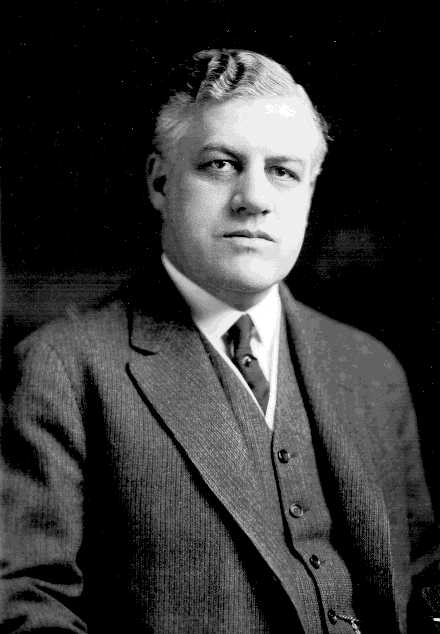
2)      Sloanism – named after the President of the General Motors Corporation, Alfred P. Sloan.  Sloanism is in many ways the perfection of Fordism; automobiles were provided in a variety of styles (kind of), and a variety of price ranges

(a)    Creation of the General Motors Acceptance Corporation – GMAC created in order to provide financing for potential automobile purchasers who could not pay cash for an automobile.

(b)   Triumph of Sloanism – by 1927, falling sales of the Model T forces Ford to shut down production, and re-tool for the production of the Model A.  In 1924, Ford had commanded 55% of the new car market.

(c)    Increased importance of advertising – used to help people differentiate between largely undifferentiated products; advertising allowed companies to manufacture desires in their customers.

III. The Strikes of the 1920s

A. Coal Mining

1. Battle of Matewan

2. Battle of Blair Mountain--after the events at Matewan, the UMW called on miners and other union members to assemble in West Virginia, armed, to ensure the safety of union miners in the state. Some 10,000 to 15,00 men answered the call, and marched south to Mingo County, where they took part in the largest armed insurrection in the United States since the Civil War.


B. Railroad Industry

1. 1922 Railroad Shopmen's Strike--when the Rail Board approved a 7 cent an hour wage reduction, shopmen voted to go out on strike. The railroads were able to hire enough strikebreakers to fill about three-fourths of the positions; this provoked a violent response from strikers, who attempted to intimidate strikebreakers to stop them from taking their jobs; this in turn brought forth the full police force of the government.

C. Textile Industry


1. 1929 Gastonia Strike--although textile manufacturers had moved South to avoid labor confrontations, working conditions in the mills provoked workers in Gastonia, North Carolina, to attempt to unionize in 1929. Led by members of the Communist Party, the strike provoked violence from both mill owners and local government. After the headquarters of the National Textile Workers Union (NTWU) in Gastonia was attacked, and striking workers evicted from their company-owned homes, a tent city was erected on the outskirts of town, guarded by armed strikers. When the sheriff showed up to demand the strikers turn over their guns, an altercation occurred and the sheriff and several miners were killed. Eight miners were charged with murder, and convicted on rather flimsy evidence--thus breaking the strike.

Monday, November 7, 2011

The IWW and Class Warfare in Early 20th Century America

I. The Industrial Workers of the World (IWW)

A. Founding

1. The Continental Congress of the Working Class--The IWW was founded at a meeting of political and labor radicals in Chicago in 1905. Attendees at the meeting included Eugene V. Debs, Daniel DeLeon, Helen Gurley Flynn, and Mother Jones. Perhaps the most important attendee was the vice-president of the Western Federation of Miners, William D. "Big Bill" Haywood, however. Haywood not only chaired the meeting, but also represented the largest contingent of workers in the now organization

2. Western Federation of Miners--The Western Federation of Miners (WFM) was founded in 1893, founded by groups of miners in the west. Whereas the UMW represented largely coal miners, the WFM represented a lot of  "hard-rock" miners, those mining minerals, in the region. As did the UMW, the WFM attempted to organize not only miners, but also surface workers; eventually, the WFM transformed itself into the Mine, Mill, and Smelter Workers.

a. Bloody conflicts between the WFM and mine operators--in particular in the Cripple Creek strike of 1903-1904, when the full weight of the state of Colorado was used to crush the strike, the WFM determined that they needed radical allies.

3. Left-wing factionalism--besides the WFM contingent, the founding convention also featured the two leading socialiss of the time, Eugene V. Debs and Daniel DeLeon. DeLeon was know for his hostility toward the AFL; Gompers was a "labor fakir" and "the greasy tool of Wall Street," while the AFL was "a cross between a windbag and a rope of sand." This hostility, however, also was oftentimes evinced against other leftist who had differing opinions from DeLeon's, as well. The Debs' faction evolved into the Socialist Party of American (SPA), which became the largest most radical political party, while DeLeon was forced out of the IWW in 1906.

4. "Big Bill" Haywood--among the variety of humanity at the convention, the person who became the most important to the IWW was the chair of the meeting, William Haywood. A rugged hulk of a man, Haywood was well-known for his sinister appearance, in part the result of a boyhood whittling accident. Haywood followed the footsteps of both his mather and his stepfather by entering the mining profession at the ripe old age of 14. His belief that "the working-class and the owning class have nothing in common" was shaped by his early personal experience.

a. Boyhood in Utah--Haywood's father died of pneumonia when Haywood was just 3 years old, leaving him and his mother destitute. The economic situation of the family improved only slightly when she re-married; Haywood entered the mines at the age of 14 because of family need.

b. Haywood also attempted to make a go of it as a homesteading farmer after his marriage, but lost his claim when the US government seized the property (with no compensation) to make an Indian reservation.

5. Cripple Creek--During an organizing drive in the goldfields southwest of Denver in 1903, the WFM was attempting to organize miners, smelter workers, and reduction workers near Cripple Creek. A couple instances of minor violence (whether instigated by strikers or agents of the mine owners is under dispute), the governor of Colorado agreed to call out the militia--over the local sheriff's objections. Insisting that the state could not afford to keep the militia on duty for an extended period of time, the governor insisted--and local mine owners agreed--that the mining companies would pay for the militia. This led to the wholesale arrest and deportation of strike leaders and other "trouble-makers," without trial or even charges being brought forward. From this experience, the WFM leadership concluded that radical allies would be needed.

B. The Spirit of the Wobblies--The IWW had the greatest appeal to itinerant workers of the West--mainly miners, workers on construction gangs, and migratory harvest hands, among others. IWW organizers also had some success immigrant workers in steel mill, packing plants, and textile mills.

1. Free speech fights--IWW members gained some noteriety in cities in the west for their insistence upon exercising their rights to free speech--clambering on top of soapboxes on sidewalks to rail against the evils of capitalism. For these acts, members were hauled off to jail, beaten, fed rancid food, and sentenced to inordinately long jail terms--which induced hundreds, and sometimes thousands, of other members to come to town to join their comrades.

2. The Man Who Never Died--Joel Emmanual Hagglund, sometimes known as Joe Hillstrom, but best known as Joe Hill, is best remembered today as the bard of the IWW, the most popular songwriter of an organization known for its love of song. Hill was executed in 1914, convicted of a murder the evidence suggested he never committed.

3. 1916 Everett Massacre--IWW organizers working with shingle fanners in Everett, Washington were run out of town by a "Citizens Alliance" (sponsored, of course, by shingle manufacturers), some 300 Wobblies returned determined to again exercise their First Amendment rights. The men boarded two ferry boats, and sailed back across Puget Sound from Seattle to Everett. Upon their arrival, the sheriff called out, "Who is your leader?" The Wobblies replied en masse "We are all leaders!"--whereupon, the shore party opened fire, killing at least five and perhaps as many as 12.

4. 1917 Bisbee Deportation--in July 1917, after the IWW called a strike against the Phelp-Dodge Mining Company which had refused to bargain with the union (and 80 percent of the workers walked off the job), company officials and company allies (and there were plenty, since Bisbee was a wholly-owned subsidiary of Phelps-Dodge) rounded up strikers and strike sympathizers and transported them--against their consent--from Arizona to a deserted spot about 20 miles east of Columbus, New Mexico, leaving them in the desert their with no food or water.

Monday, October 31, 2011

Labor and the Progressive Movement

I. Employers and Unions: A New Understanding

A. The Imperial Impulse--The War With Spain

1. The War for Capitalist Markets

2. The Response of Euguene Debs and the Socialists

3. The Response of Samuel Gompers and the AFL

B. The National Civic Federation

1. Early History

2. Make-up of the National Civic Federation

3. Samuel Gompers and John Mitchell

II. Role of Coal

A. Stoking the Fires of Capitalism

1. Railroads--coal provided the fuel for locomotives--but it was also instrumental in the manufacture of most railroad-related material, including the manufacture of the locomotives it powered, the rolling stock these locomotives pulled, and the rails that the trains ran on.

2. Skyscrapers--coal was instrumental in making the structural steel that allowed for the transformation of architecture, and the creation of the urban landscape as we know it.

3. Automobiles--coal was also instrumental in producing the main product that was responsible for effecting the emergence of another fossil fuel that dominated American life during most of the 20th century.

B. Growth of Coal Mining in the  19th Century

1. 1840--7,000 men were employed in mining coal in the United  States,  who mined 2 million tons
2. 1870--186,000 coal miners mined 37 million tons.
3. 1900--677,000 coal miners mined 350 million tons
C. Transformation of American life--coal powered the technological  change the transformed American life in the second half of the 19th century  and the first two decades of the 20th.

D. Capitalist enterprise in coal

1.  Intensification of capital--at the beginning of the 20th, the coal industry began a period of consolidation. In Colorado, for example, two companies, Victor Coal Company and Colorado Fuel and Iron (owned by the Rockefellers) mined most of the coal in that state.

2. Early stage of consolidation--in 1900, no one company owned more than 3% of the national market; but of America's 100 largest companies, a dozen were mining companies.

II. Life of Mother Jones

A. Mary Harris

1. Discrepancies in her life story

a. Birth date--According to Autobiography of Mother Jones, she was born May 1, 1830. According to her baptismal certificate in Cork, she was baptized in August of 1837. Her parents were not married until 1835. What explains this discrepancy? Although she was not as old as she claimed, she was advanced in years at the time this book was written, which may have effected her memory. As May 1 became identified with the labor movement, what could be more appropriate than the mother of the labor movement claiming that day as the one of her birth, as well? Her advanced age rendered her activities more weight, and allowed her to transcend the limitations that most women had to operate under during this time period.

2. Immigration

a. Potato Famine – it is likely that Mother Jones’ father and older brother left during the Potato Famine (1845-1847); between 1845 and 1853, over 200,000 people a year left Ireland for another country.

b. Immigration to Canada – it is likely that her father immigrated directly to Canada from Ireland—passage was less expensive the year he most likely left; in the 1850 US Federal Census he is listed in Vermont, but the family resided in Toronto, Canada.

3. Education – she attended a normal (teaching) college, but did not finish.

4. Pre-marriage work--Teacher at convent school in Monroe, Michigan. She also worked as a seamstress in Chicago. Before the outbreak of the Civil War, Jones moved and became a school teacher in Memphis, TN

B. Mary Harris Jones

1. Married George Jones – in 1861, shortly after moving to Memphis, Mother Jones met and married iron molder and union member George Jones.

2. Raising a family – the Jones’ shortly had four children in their brief marriage, three girls and a boy

3. 1867 Yellow Fever Epidemic--Mary Jones lost all four children and her husband to the epidemic

4. Move back to Chicago--and worked as seamstress

5. Great Chicago Fire 1871

6. Period between 1871-1894 – the mystery period in the life of Mother Jones

7. 1877 Great Upheaval – may have been in Chicago, put she was not a leading figure in the strikes in Chicago as she claimed (probably a part of her persona).

8. 1886 Haymarket Square – although she disdains the politics of the Chicago anarchists, she upholds them as men of ideals, to be emulated

9. 1894 Coxey’s Army – her first real appearance as Mother Jones; she is part of an advance party for a western band of unemployed who are marching east to join up with Jacob Coxey for his march on Washington.

C. The Emergence of Mother Jones-- Mother Jones is able to use her age and gender to her advantage; because of her age she is able to act in ways that other women are restricted from.

1. Appeal to Reason – socialist newspaper which Mother Jones helped get off the ground; eventually had 750,000 subscribers, and often reached many more readers.

2. Radical political ideas appealed to a great number of people during this time period.

III. United Mine Workers

A. Founded-- January 1890, struggled to remain in existence during that decade, having to overcome a disastrous strike in 1894.

B. 1897 Central Competitive Field Strike--the Central Competitive Field stretched from western Pennsylvania to central Illinois. The strike began July 4,  1897 in response to attempts to implement a wage cut. The strike lasted until January 1898, but ended  in a union victory--a pay raise,  8-hour day, dues check-off, and union recognition.  The settlement also benefited operators, because the settlement helped end the cutthroat competition.

C. 1897 Eastern Pennsylvania Anthracite  Strike--miners in the anthracite district, not members of the UMW, went on strike because of wage cuts.  A  group of 200 marched  to a mine in Lattimer,  Pennsylvania to call miners there to join the strike; mine guards shot into the group, killing 19 miners.

D. John Mitchell--the UMW president, believed that the National Civic Federation was key for settling labor disputes--which is why he accepted the deal brokered by President Roosevelt that ended the strike without the anthracite operators recognizing the union as sole bargaining agent for the miners. Jones, on the other hand, argued that workers could only rely upon themselves, and the power they could claim by withholding their labor.


6. George F. Baer and the Divine Rights of Money

7. Theodore Roosevelt and the Strike Settlement

D. Women Workers and the Triangle Shirtwaist Fire

E. Ludlow

1. Coal Mining in Colorado

2. Coal Industry and Colorado Politics

3. The Colorado Coalfield War

Monday, October 24, 2011

Homestead and Pullman

I)                   Homestead

A)    Iron and Steel Industry – by the late 1880s and early 1890s, the iron and steel industry had overtaken railroads as the premier industry in the United States. Millions of tons of steel and steel products – rails, armor for railroad cars and locomotives, machines, machine tools (machines that made other machines), as well as for structural support for new high-rise buildings in the larger cities (which we know as skyscrapers).

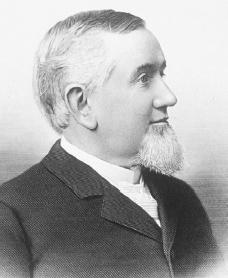
1)      Andrew Carnegie – former railroad executive secretary, Carnegie took the advice of his boss, Pennsylvania Railroad president Thomas A. Scott, and took the opportunity that presented itself to invest in the iron industry.

(a)    Carnegie was already a wealth investor when he became involved in the iron and steel industry. Carnegie applied many of the techniques in business management that he learned in the railroad industry (particularly cost-accounting and business coordination, which helped keep his costs well below that of his competitors); he also retained control of the stock of his company, which allowed him to reinvest the profits back into the company, and therefore buy the latest equipment, and hire the best and brightest technical people.

(b)   Vertical integration – Carnegie owned not only the steel mills that produced steel, but he also bought the mines that produced the iron ore and coal need for production, the coking plants that produced the needed coke (processed coal), and the railroad cars and shipping fleet needed to bring in the raw materials and distribute the finished product.

(c)    Philanthropy – Carnegie used the wealth he helped create to greatly strengthen the public library system in the United States; he also endowed universities, built Carnegie Hall in NYC—and he advocated that other men of wealth follow his lead.

2)      The drive to economize – the “secret” of Carnegie’s business success was that his management team was as driven to cut the costs of business as he was (in part because their reward system depended upon it—managers received a substantial portion of the savings they created for the company due to increased productivity; this same opportunity was denied workers who also contributed to this effort by working harder and longer).

(a)    Productivity – defined as manufacturing, or making, more of an object at the same or less cost as compared with an earlier time period. Productivity is the basis for capitalist profit, which in theory allows them to “share” their decreased cost with the consumer, so “all” benefit.

(i)                  Business competition – Carnegie’s compatriots drive to decrease costs tended to drive out of the business those manufacturers who could not keep pace; because of the capital investment to get started in the business, however, a buyer (quite often Carnegie) could be found for the property. With more and more manufacturing capacity being held by fewer and fewer companies, the tendency of capitalist enterprises towards monopoly becomes more pronounced.

(ii)                Business cycle – also known as the “boom and bust” cycle; businesses run like crazy to produce goods to sell, the market for a particular good becomes saturated, causing a glut, and then follows a time of little production, until demand picks up again.

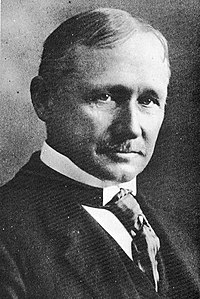
(iii)               Taylorism – Frederick Winslow Taylor was convinced that he could find the “one best way” to accomplish any job. Taylor himself came from an upper middle class background, but he became a machinist. “Soldiering” and what he perceived as inefficiencies of his fellow workers led him to develop time and motion studies, and to outline management practices devoted to prodding workers to put in 60-minute hours at work.

(b)   Technology – this drive for greater levels of productivity also led American industrialists to use more machines than capitalists in other countries

(i)                  Lack of skilled workers? – Some historians and economists have argued in the past that because the United States allegedly lacked skilled workers, that industrialists relied more on the development of machines and machine tools to compensate. Today this reliance seems to have come about for other reasons

(ii)                Labor costs – the increased level of machine use helped capitalists keep down the cost of labor, because the capitalist was able to replace skilled workers (who would have cost him more) with unskilled workers to tend the machines (who cost much less, and were easily replaced should they become recalcitrant.

(iii)               This also undermined the position of the union worker, obviously, especially the skilled worker, who made up most of the ranks of the unions belonging to the AFL. Union members within the AFL umbrella fight battles to retain the benefits of the knowledge they had gained from working a particular job.

(i)      “Featherbedding” – some AFL unions were successful for a time in keeping workers whose jobs had become technologically obsolete.

(c)    Profits – by the early 1890s, the Carnegie Steel Company was making profits of more than $40,000,000 a year

3)      Amalgamated Association of Iron, Steel, and Tin Workers (AA) – in 1892, the AA was the largest and strongest union within the AFL, with approximately 24,000 members. The members of the union included only the skilled workers in iron, steel, and tin foundries; not considered for membership was a much larger contingent of unskilled workers, many of whom were new immigrants from Eastern Europe.

B)     Homestead and the strike

1)      City of Homestead – named after the nearby iron mill, Homestead was located several miles from Pittsburgh, up the Monongahela River. The town was completely dominated by the Carnegie mill—but the town leaders and townspeople identified with the workers more than Carnegie or his managers.

2)      Homestead works – Ford C. Frick was hired by Carnegie to rid Homestead of the AA. After putting Frick in charge, Carnegie left for an extended stay in his castle in Scotland, but communicated in secret with Frick.

(a)    “Negotiations” – Frick made demands upon the AA which he knew would be unacceptable, and then locked out union members when negotiations broke down in late June. Before the lockout, Frick had an eight-foot steel fence erected around the entire works

(b)   Pinkertons – on July 6, a bargeful of 300 Pinkerton agents was discovered motoring up the Monongahela by union lookouts, who quickly notified union members in Homestead. Union members quickly occupied the Homestead works, and a fierce gun battle raged along the riverfront for most of the day, when finally the Pinkerton agents were forced to surrender; agents were forced to run a gauntlet in town, and many were severely injured as a result

(c)    Won the battle, lost the war – the Allegheny sheriff was unable to recruit locals to “establish order,” and appealed to the governor for mobilization of the militia, and eight thousand troops arrived shortly to protect strikebreakers

(i)                  The Carnegie Company had the strike and union leaders arrested, some of who were charged with murder; after trials, all were found not guilty, but the defense efforts depleted the union treasury

The strike was conceded on November 20, 1892, and immediately the Carnegie Company lowered wages and increased the hours of its workers. The defeat of the strike ended the influence of the AA.

III. 1894 Pullman Strike.

A.  George Pullman – made his fortune hauling Chicago out of the muck; after the Great Fire of 1871, efforts were made to raise the remaining buildings as much of the swamp that the city was built on was filled. Pullman used this money to establish a company to build sleeping cars used on long trips by railroad companies.

B. Town of Pullman – as the company grew, Pullman became concerned about the effect the radicals in Chicago were having upon his workers, so several miles south of the city he built a town (housing, stores, public buildings, a hotel he named after his daughter Florence, even churches) which he rented to workers, but which he retained title.

1) “Model” town – Pullman the town was a great example of welfare capitalism—that is, subsidizing certain amenities for workers so they remain satisfied on the job.

2) Depression of 1893 – the economic depression of 1893 cut deeply into the profits of the Pullman Company, and Pullman responded by cutting wages and laying off workers, as any good capitalist would do.

(a) Pullman rents – Pullman refused to cut rents in the same manner, however, since that division of the business had to show a profit as well.

(b) Pullman workers respond by going on strike in the spring of 1894.

C. Eugene V. Debs – a former officer of the Brotherhood of Railway Firemen, Debs in early 1894 became president of an early industrial union for railway workers, the American Railway Union.

1) Railway “Brotherhoods” – each specialty in the railroad industry had its own union, The Brotherhood of Railway Engineers, Brakemen, Conductors, Firemen; problems arose when railway companies settled with one of the brotherhoods, and they crossed the picket line while others were still on strike. The ARU is meant to be a solution to this problem.

2) 1894 ARU convention – was held in Chicago; a delegation of workers from Pullman, who plead for the assistance of the ARU. Despite Debs opposition, convention delegates vote to assist Pullman workers, and vote to boycott all trains with Pullman cars. Despite the fact that the ARU represents a relatively small number of workers, traffic all over the country is interrupted.

3) Government response – because there was little violence accompanying the strike the federal government was hamstrung; with a sympathetic John Peter Altgeld as Illinois governor, there was little chance that federal aid would be requested.

(a) Richard Olney – the AG for the federal government was a railroad attorney, and it was he who suggested attaching Pullman cars to mail trains (interfering with the mail is, of course, a federal offense).

(b) Troops from Fort Sheridan (and the Dakotas) are called in “to keep the peace,” which allowed the strike to be broken.

(c) Debs and other union leaders were arrested and held incommunicado, which also helped break the strike; Debs spent a year in jail in Woodstock, Illinois, which he spent reading socialist tracts; he becomes the Socialist Party candidate for president in 1900, 1904, 1908, and 1912, when he polled the largest number of votes to that time in history for a third party candidate.